
Businesses have many choices for fire safety. A pre-action fire sprinkler device resembles a dry-pipe sprinkler system in appearance. There are three types of fire suppression systems – wet pipe, dry pipe, and deluge. Pre-action fire sprinklers are intended for water-sensitive areas that need protection against unintentional water flow into sprinkler device piping. Other sprinkler devices are vulnerable to unintentionally discharging water, which may do significant harm to fragile objects.
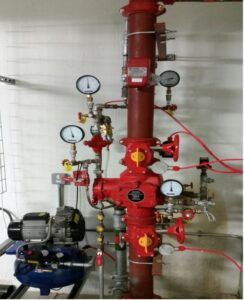
Understanding how a pre-action sprinkler system works can help businesses determine whether it is the right solution for their fire protection needs.
Types of pre-action sprinkler system
A pre-action sprinkler system is used to be a hybrid between wet and dry pipe sprinkler systems. However, it mostly employs the dry-pipe sprinkler principle. It means water is not readily accessible in the piping system unless caused by smoke or heat sensors. Pre-action pipes, like dry pipe systems, are filled with compressed air or nitrogen rather than liquids. The pre-action valve regulates the flow of water, unlike a dry pipe system. A pre-action sprinkler system can be divided into three types.
Single Interlock – This device allows a single prior fire detection incident to occur. This occurs nearly invariably as a result of a heat or smoke detector being used. When this occurs, the pre-action valve opens, allowing water to reach the piping structure. If a sprinkler head starts before this, it will alarm a warning but no water will discharge. Critical areas where it is important to control accidental water discharge due to a damaged Fire sprinkler system or damaged sprinkler piping are the important applications for single interlock systems. Details are given below;
Double Interlock – Double interlock pre-action fire sprinkler systems are best suited for protecting highly water-sensitive areas, such as museums and exhibits where accidental water discharge could cause significant damage. Pressurized air or nitrogen is applied to the system piping in a double-interlock pre-action system. This aids the detection of potential leakage and keeps the water in place if the valve fails to prevent an unintended discharge. When it comes to accidental discharge, the double interlock mechanism provides an additional layer of security.
Non-interlock – If the supplementary monitoring mechanism is engaged, the main valve opens, releasing water into the sprinkler piping, ready to be released to the heat supply until the heat increases sufficiently to trigger the automatic sprinkler systems. If the automatic sprinklers alone are triggered in a non-interlock configuration, the key valve will open and discharge water into the safe area without waiting for confirmation from the electrical detection unit.
Applications of Pre-Action Sprinkler Systems
Pre-action fire protection systems are beneficial in water-sensitive areas because they provide additional protection against unintended activation. They’re an excellent option for water-sensitive environments. Pre-action systems can be used in the following facilities:
- Museums
- Libraries
- Datacenters
- Archives
- Freezer warehouses
- Computer rooms
- Telecommunication centers
- Process control rooms
Benefits of pre-action fire sprinkler systems
- Well-equipped for water-sensitive environments such as data centers, archival vaults, and labs
- Water is discharged in two ways, ensuring that no water is accidentally released
- Water and fire damage are avoided
- Water does not freeze in the pipes and it is not easily kept in the plumbing structure until the valve is engaged, which makes it ideal for very cold environments
American Fire Protection Systems, Inc is No.1 choice in Los Angeles for any type of fire safety solution like fire sprinkler installation, inspection, repair, and maintenance for a decade. Our expertise lies in identifying the best options for the fire suppression system requirements. For your emergency fire safety needs contact us any time. Visit us for more details about our services: https://www.americanfireinc.com/
Frequently asked questions
What makes a pre-action fire sprinkler system different from other sprinkler types?
Unlike wet-pipe systems, the pipes stay filled with compressed air or nitrogen instead of water, and a dedicated pre-action valve controls when water actually enters the piping – normally only after a heat or smoke detector confirms a real fire event.
What are the three types of pre-action systems, and how do they differ?
The difference between single-interlock, double-interlock, and non-interlock pre-action systems comes down to activation requirements. Single-interlock releases water when a detector is triggered; double-interlock requires both a detector and sprinkler activation; and non-interlock releases water when either is triggered.
Which type of pre-action system offers the highest protection against accidental discharge?
Double interlock systems, since they need two independent triggers (detection plus heat-activated sprinkler head) before water is released, making them well suited to highly sensitive collections like museum artifacts.
What kinds of buildings or spaces typically use pre-action sprinklers?
Facilities where water damage would be especially costly, such as museums, libraries, data centers, archives, freezer warehouses, computer rooms, telecom centers, and process control rooms.
Why are pre-action systems a good fit for cold environments?
Because water isn’t held in the pipes until the valve activates, there’s no standing water to freeze, which reduces the risk of pipe damage in low-temperature settings like freezer warehouses.
What’s the main advantage of a pre-action system over a standard sprinkler system?
It requires a two-step confirmation before releasing water, which significantly lowers the chance of accidental discharge and the resulting water damage to sensitive equipment or materials.